The fare is on the card. The pick-up is on the card. The one thing that decides your evening — where you end up — you have about eight seconds to work out in your head. Tailwind Drive does it for you.
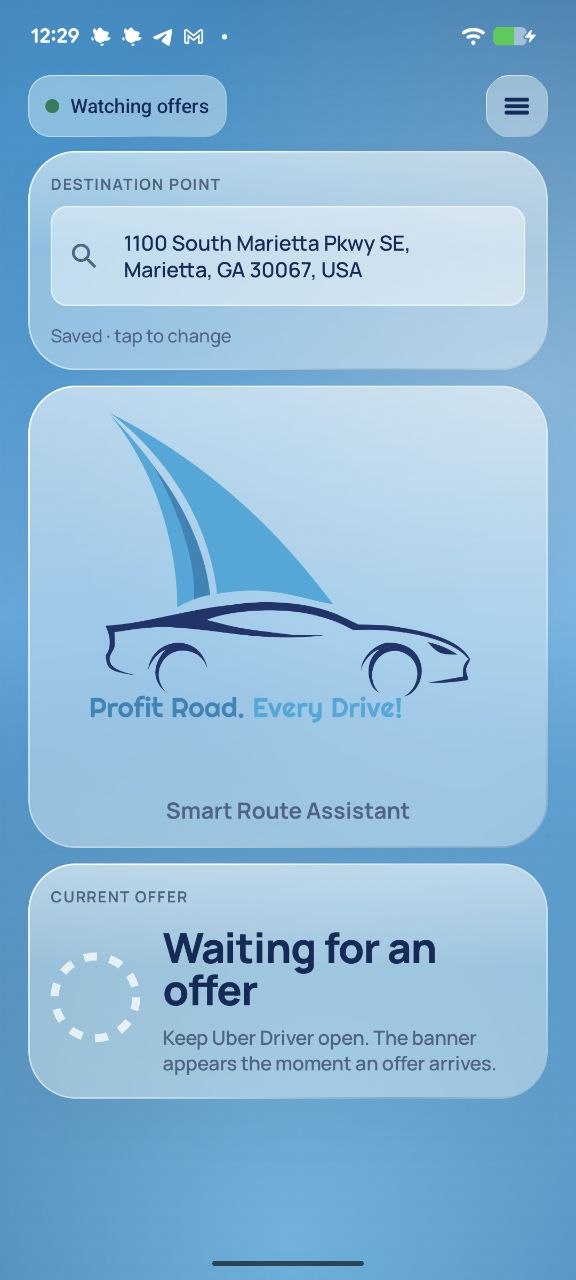
Profit Road. Every Drive.
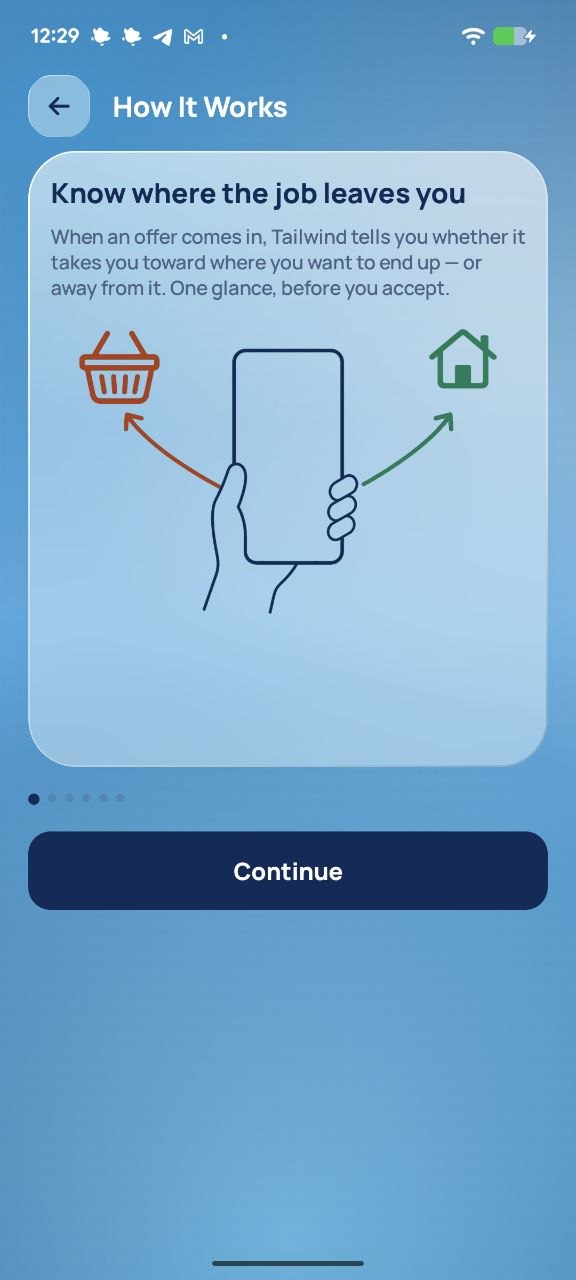
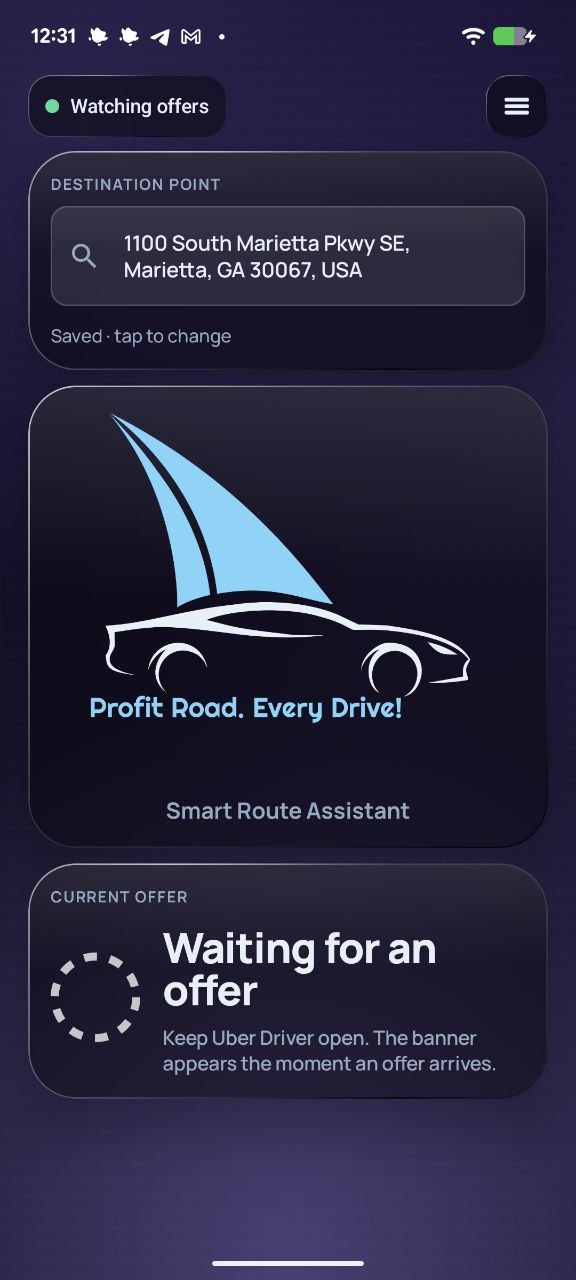
Every driver knows the trip. It pays fine, you take it, and it drops you forty minutes the wrong way. Now you either deadhead home on your own fuel, or you keep working somewhere you did not plan to be.
One of those trips a week costs more than most drivers think — roughly the fuel and wear of the empty miles, plus the half hour you did not get paid for. It is not a problem of earning more. It is a problem of not being told, in the moment, which way the trip points.
Where you want to be when the day ends — home, the gym, wherever. Set it once; change it mid-shift when plans change.
Tailwind sits behind Uber Driver and waits. When an offer appears, it reads the drop-off address off the card.
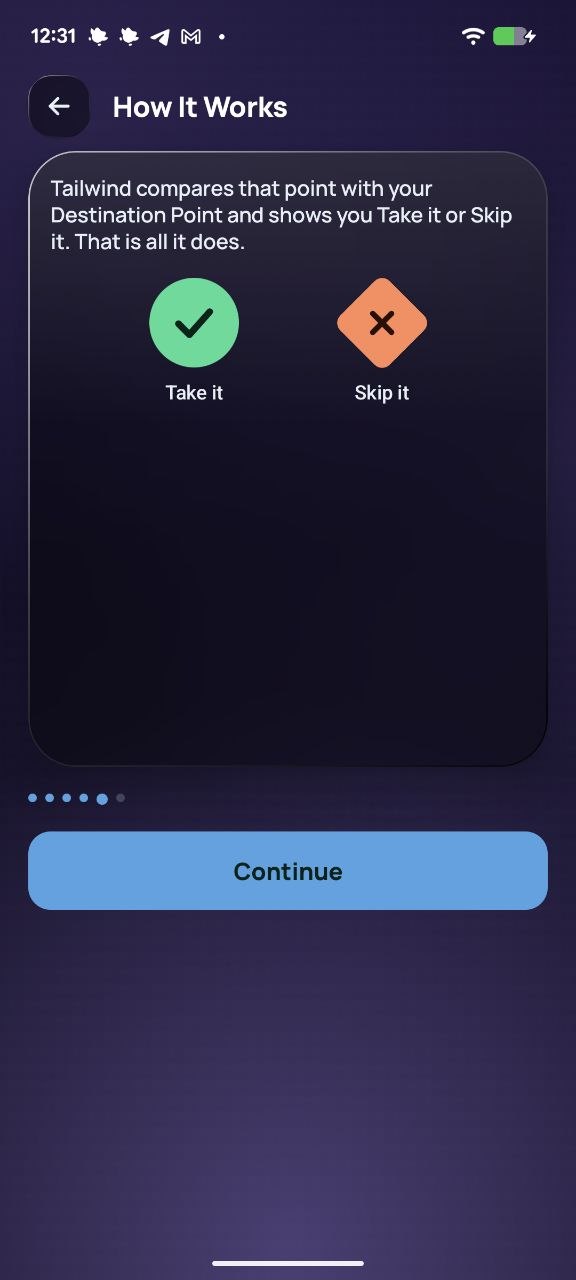
A banner appears above Uber's card: Take it or Skip it, with how much closer to home the trip leaves you. It never covers the Accept button.
Green circle: take it. Amber diamond: skip it. The colours are not red and green, and the shapes are not both circles — roughly one man in twelve has trouble telling red from green, and this is the one signal the whole app exists to deliver.
It has to survive a glance from a phone in a mount, in daylight, with a timer running. So it carries the meaning twice: in the colour and in the shape.
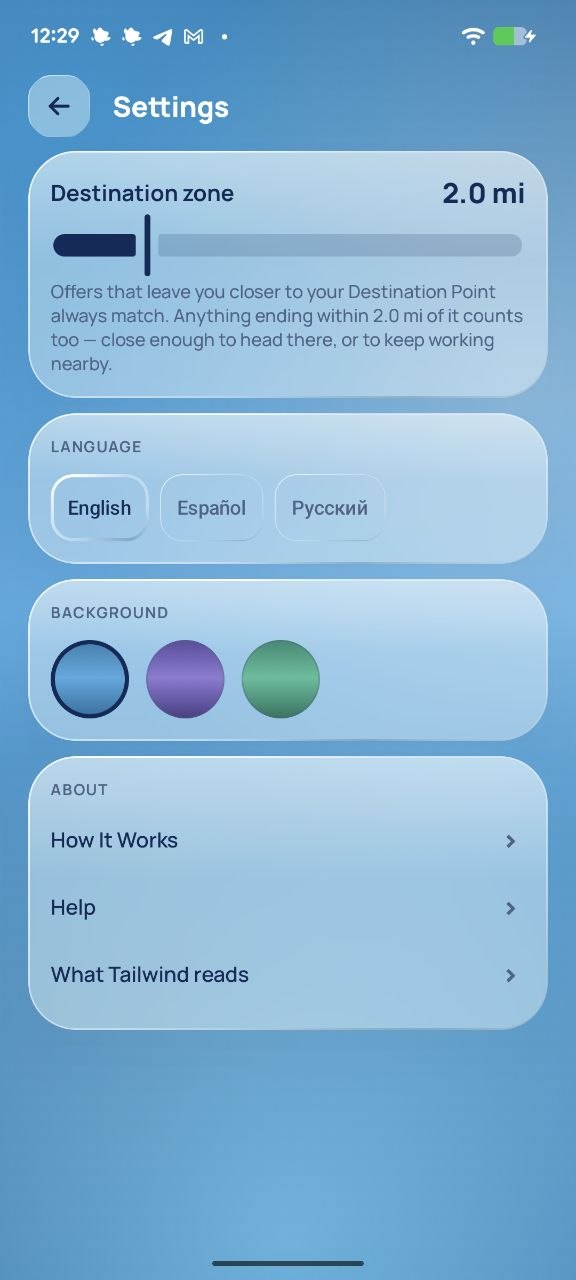
A trip that ends near your Destination Point counts as a match even if it does not end exactly on it — close enough to head there, or to keep working nearby. You decide how wide that zone is.
English, Español and Русский, because a large share of drivers in the US did not grow up speaking English and almost every tool for them is English-only. Addresses stay American in every language, because the roads do.
Today Tailwind answers one question, because that is the one you have eight seconds to answer: does this trip point toward where you want to end up. Next comes the dollar-per-mile on the same strip, and then a floor you set yourself — so the offers that survive are the ones that pay and take you the right way.
It never taps anything for you. It does not accept offers, decline offers, or touch Uber on your behalf. It reads, it compares, it shows you the answer. What you do with it is yours.
To see the offer card, Tailwind takes one picture of your screen when an offer appears and reads the text off it on the device. That picture is never saved and never sent anywhere.
Exactly one thing leaves your phone: the drop-off address as text, sent to Google to turn it into a point on the map. There is no account, no sign-in, no ads, no analytics, and no server of ours receiving anything.
So the night theme is not an afterthought toggle — it follows your phone, and the verdict keeps the same shapes and the same two colours it has in daylight. Nothing you learned to recognise at noon changes at eleven.
Tailwind Drive is being tested on real shifts right now. It reads US addresses and works with Uber Driver on Android. Join the waitlist and you will hear when it opens up — and if you drive and want to break it early, say so in the same email and you will get in sooner.